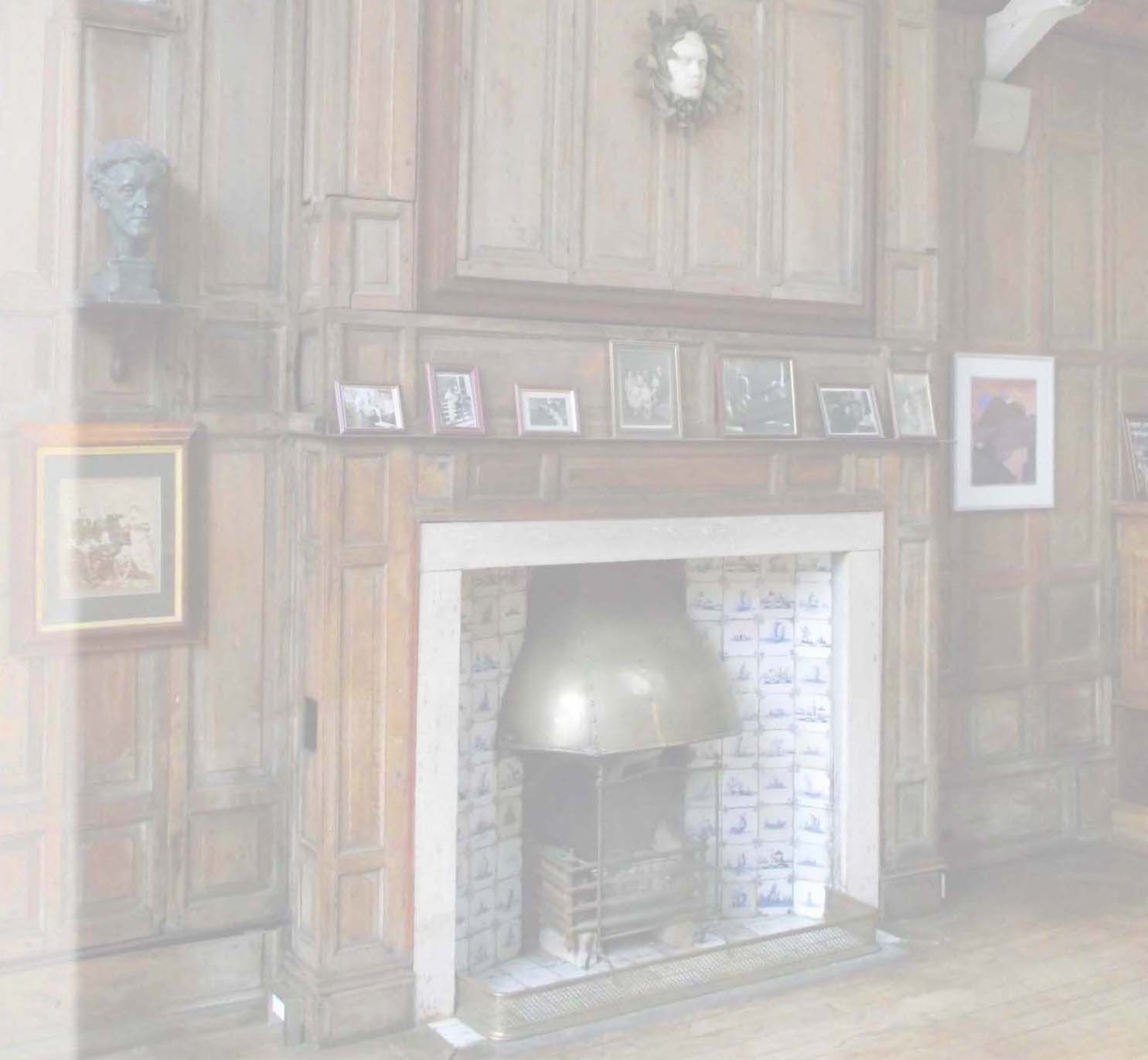


This unique house, 'Atelier', 14, Kidderpore Avenue, was designed and built in 1901 by the artist George Hillyard Swinstead for his family and as his art studio. George Swinstead died in 1926 but the family continued to live in the house until the second world war when they abandoned the house and it was bought by Harold Craxton and his wife Essie in 1945 after they and their family were bombed out of their home in St. John’s Wood during the Blitz. Their six children included the distinguished oboist Janet Craxton; the painter John Craxton R.A. and the BBC’s Royal events television director Antony Craxton C.V.O.
Professor Harold Craxton O.B.E (Royal Academy of Music), an eminent and much-loved pianist and teacher, lectured, taught and entertained at the house and accompanied some of the finest singers and musicians of the day. As a result, the house became a focal point for music and the artistic milieu in London. Among the many who came to visit were:
Larry Adler, Dame Peggy Ashcroft, Sir Frederick Ashton, Vladimir Ashkenazy, Winifred Atwell, Dame Janet Baker, Sir John Barbirolli, Sir Lennox Berkeley, Sir John Betjeman, Pierre Boulez, Julian Bream, Denis Brain, Benjamin Britten, Lord Kenneth Clarke, Johnny Dankworth, Sir Peter Maxwell Davis, Alfred Deller, Dietrich Fischer-Diskau, Kirsten Flagstad, Dame Margot Fonteyn, Lucien Freud, Leon Goossens, Gerard Hoffnung, Howard Keel, Cleo Laine, Witold Lutoslawski, Gian Carlo Menotti, Sir Yehudi Menuhin, Sir Henry Moore, Peter Pears, Mstislav Rostropovich, Elizabeth Schwarzkopf, Stephen Spender and Graham Sutherland , to name but a few!
Harold's daughter Janet Craxton, distinguished oboist and Professor of the Royal Academy, lived and taught at 14 Kidderpore Avenue with her husband Alan Richardson, composer, pianist and Professor of the Royal Academy, and used it for rehearsals and auditions for the many groups and ensembles in which she was involved. The late John Craxton R.A., one of the foremost painters of the post-war, figurative era, also lived and worked in the house until his death.
Harold Craxton died in 1971 and to commemorate his memory the Harold Craxton Memorial Trust www.craxtonmemorialtrust.org.uk was created to assist young, extremely talented musicians embarking on a professional career.
Essie Craxton died in 1977 and Janet Craxton died in 1981. Following Janet's death, Antony, Michael and Alisi (Michael's wife) managed the music rehearsal business until 1993 when Michael's daughter Jane Craxton and her partner Kim Mathen took over. The house now provides the cream of national and international classical and jazz musicians with a unique and distinctive ambience for musical excellence as well as offering other organisations a singular and exclusive venue.

